
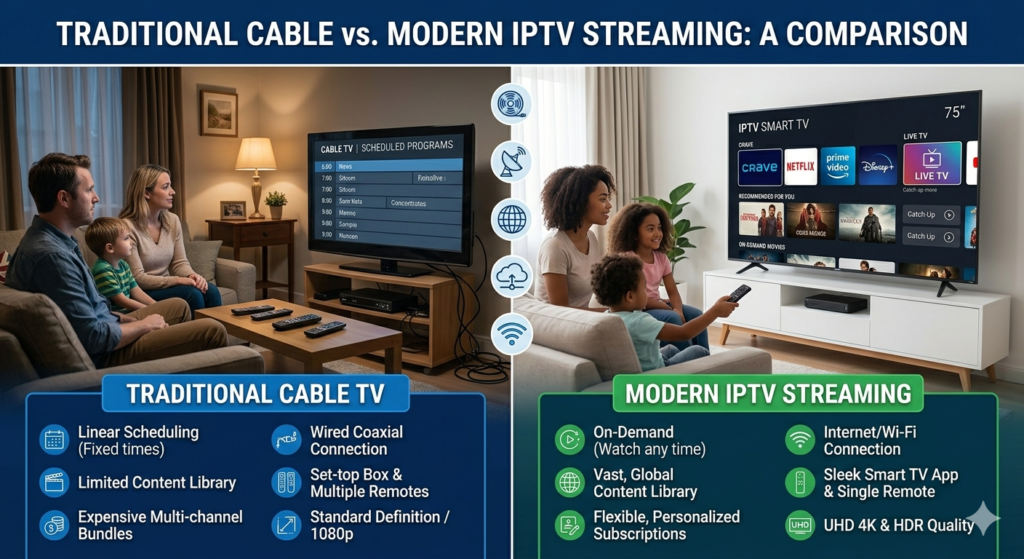
Introduction to IPTV and Cable TV
In the ever-evolving landscape of television entertainment, two prominent options have emerged: IPTV (Internet Protocol Television) and traditional Cable TV. Each service offers unique features, delivery methods, and technology that cater to diverse viewer preferences.
IPTV utilizes the internet to deliver television programming through a protocol that transmits video content via a broadband connection. This approach allows users to stream live and on-demand content through various devices, including smart TVs, computers, and smartphones. Unlike traditional broadcasting methods such as satellite or over-the-air antennas, IPTV operates using a stable internet connection, providing flexibility in how and where content can be consumed.
On the other hand, Cable TV relies on a more conventional delivery method. It transmits television signals through coaxial cables directly into subscribers’ homes. This system typically requires users to have a physical connection to their local cable provider, which restricts flexibility, often confining viewers to specific devices, such as set-top boxes or cable-ready televisions. While Cable TV has long been a staple in households across regions like the USA, UK, and Canada, it is increasingly facing stiff competition from more modern services including IPTV.
The growing popularity of IPTV can be attributed to several factors, including cost-effectiveness, personalized viewing experiences, and a broader selection of channels. As internet accessibility continues to improve and streaming technology advances, many consumers are increasingly opting for IPTV solutions over traditional Cable TV subscriptions. This trend is particularly evident in urban areas of North America, where high-speed internet connections are readily available.
Cost Comparison: IPTV vs Cable TV
When evaluating the financial implications of subscribing to IPTV services compared to traditional Cable TV, there are several factors to consider. First, let us break down the average monthly subscription fees associated with both services. Generally, IPTV tends to offer more competitive pricing, with average monthly subscription costs ranging from $20 to $50. In contrast, Cable TV, particularly from major providers, often falls in the range of $70 to $120 per month, depending on the package and services chosen.
Another aspect to assess is installation costs. IPTV services are frequently available without the need for professional installation, as they typically only require an internet connection and minimal setup. Conversely, Cable TV may impose additional installation charges, which can vary significantly from one provider to another, sometimes reaching up to $100 or more.
Equipment rental is also an important consideration in the cost comparison. Most IPTV providers do not require specialized equipment beyond a compatible device, which may already be owned by the subscriber. In contrast, many Cable TV services charge monthly fees for set-top boxes or DVR rentals, further elevating overall costs that can add up to several hundred dollars annually.
Additional expenses should also be taken into account. Subscribers to both services often opt for premium channels, sports packages, or specific add-ons that can contribute significantly to their monthly bills. While the costs for these extras can vary, IPTV often offers flexible options that allow viewers to tailor their subscription better, potentially resulting in lower expenditure for those who do not require all-encompassing packages.
One must also be wary of hidden fees that may apply to both services. Such fees can include activation charges or service fees, which can obscure the true cost of the subscription. It is advisable for potential subscribers to thoroughly review the service contracts to uncover these extra charges before making a decision.
Benefits of Choosing IPTV over Cable TV
Opting for Internet Protocol Television (IPTV) rather than traditional cable television offers numerous advantages that can significantly enhance the viewing experience. One of the primary benefits of IPTV is its flexibility. Unlike cable TV, which often requires lengthy contracts and rigid packages, IPTV services typically provide viewers the ability to choose specific channels and programming that suit their preferences. This level of customization ensures that subscribers are only paying for content that they actually want to watch.
Another advantage of IPTV is the vast array of channel options available. IPTV platforms frequently feature international channels, niche interest programming, and on-demand content that may not be offered through conventional cable packages. This variety not only caters to diverse viewing interests but also enriches the overall entertainment experience. The ability to easily switch between live programming and on-demand content adds to the allure, allowing viewers to watch their favorite shows at their convenience rather than adhering to a fixed schedule.
Furthermore, the streaming quality of IPTV is often superior to that of cable TV. With advancements in technology, many IPTV services now offer high-definition and even 4K content. As long as viewers have a reliable internet connection, they can enjoy a seamless viewing experience without the interruptions or buffering that can sometimes plague cable television. This improved quality of service can lead to greater satisfaction.
Lastly, choosing IPTV can lead to overall cost savings for viewers. The absence of installation fees, equipment rental costs, and multiple service contracts often associates with cable subscriptions means that consumers can enjoy quality entertainment without incurring exorbitant expenses. In conclusion, IPTV presents a compelling choice for those seeking greater flexibility, enhanced variety, superior streaming quality, and significant cost effectiveness.
Conclusion and Call to Action
In evaluating the financial advantages of IPTV compared to traditional Cable TV, it becomes evident that IPTV offers a range of cost-effective choices that are increasingly appealing to consumers. Subscribers to IPTV services often benefit from lower monthly fees, flexible subscription plans, and the option to select specific channels, thereby avoiding the high costs associated with bundled packages from cable providers. Furthermore, the ability to access IPTV services via the internet eliminates the need for extensive hardware and installation fees commonly imposed by cable companies.
Moreover, IPTV often features innovative functionalities, such as on-demand content and streaming options that allow users to watch their favorite shows without being tied to a fixed schedule. These features can contribute significantly to savings over time, as they diminish the likelihood of incurring extra costs for premium channels or late-night movies that may accumulate with a typical cable subscription.
As viewers evaluate their individual viewing habits and financial situations, it is vital to weigh the long-term benefits of IPTV against those of Cable TV. By considering factors such as usage frequency, desired content, and budget constraints, readers can make informed decisions that best fit their needs.
To explore the variety of IPTV streaming options currently available, we encourage readers to investigate the services offered in their regions. With numerous choices to tailor viewing experiences while saving money, IPTV may just be the ideal solution for your entertainment needs.